
MLB Team Washington Nationals Partners With Terra Blockchain Community, Ballpark Plans to Accept UST

On February 9, the American professional baseball team based in Washington, D.C., the Washington Nationals, announced the team has partnered with Terra, the open-source blockchain platform and decentralized autonomous organization (DAO). The Washington Nationals detail that the team is a “leading innovator” and is “consistently introducing new technologies to enhance the fan experience.” Washington Nationals Ink Long-Term Deal With Terra Major League Baseball (MLB) team the Washington Nationals has partnered with the blockchain platform and DAO Terra, according to an announcement published by the team on Wednesday. The deal with Terra follows a slew of sports-related deals with crypto firms, but the MLB team will be the first to partner with an open-source blockchain project. In addition to the partnership, the algorithmic stablecoin UST that’s issued on the Terra blockchain will be “accepted as a payment method at Nationals Park as early as next season.” “The Nationals continue t...
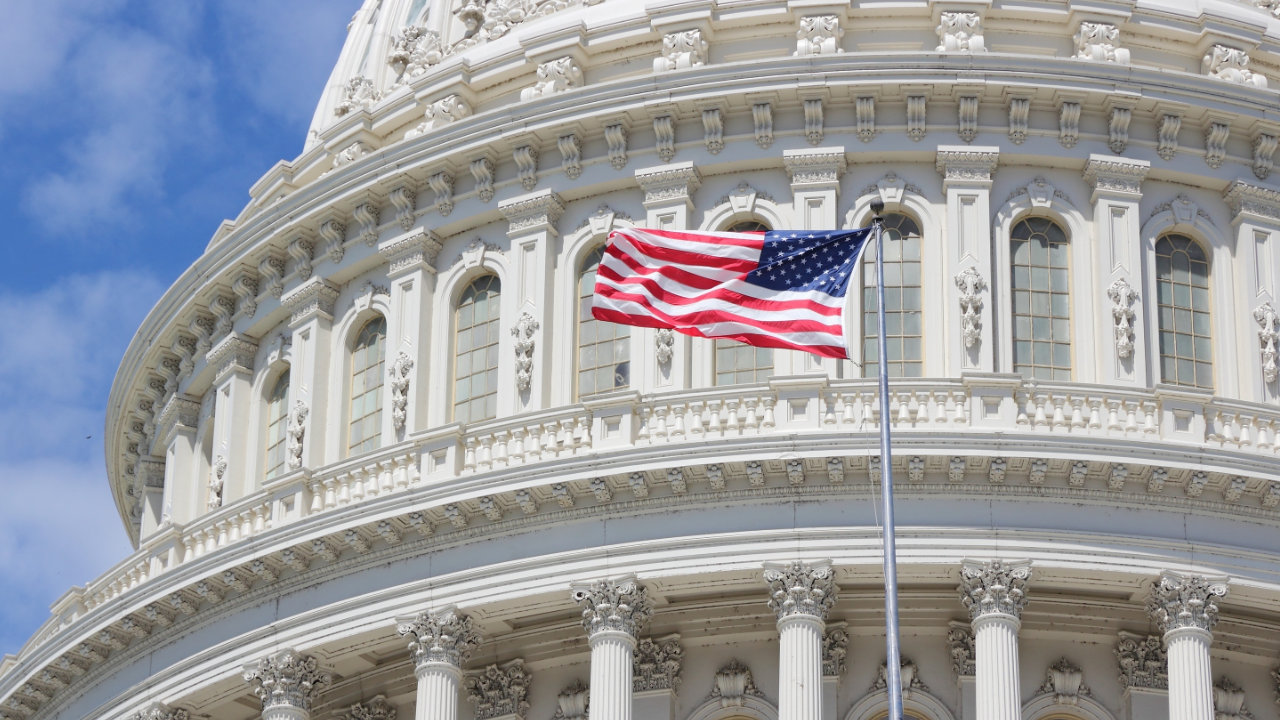
US Lawmakers Introduce ‘Virtual Currency Tax Fairness Act’ to Boost Cryptocurrency Use for Payments

US Lawmakers Introduce ‘Virtual Currency Tax Fairness Act’ to Strengthen Legitimacy of Cryptocurrency, Expand Crypto Use for Payments

Several U.S. lawmakers have introduced the Virtual Currency Tax Fairness Act to strengthen “the legitimacy of cryptocurrency in our digital economy.” The bill also aims to expand the use of cryptocurrencies for payments.

Virtual Currency Tax Fairness Act Introduced in the US

Representatives Suzan DelBene and David Schweikert introduced the “Virtual Currency Tax Fairness Act of 2022” on Thursday. The bipartisan bill is cosponsored by Congressmen Darren Soto and Tom Emmer.

The bill “would create a workable structure for taxing purchases made with virtual currency, also known as cryptocurrency,” the lawmakers explained. It will also expand the use of cryptocurrency for payments and further strengthen “the legitimacy of virtual currency in our digital economy.”

The current legislation states that any crypto gains must be reported as taxable income regardless of the size or purpose of the transaction, the lawmakers stressed, emphasizing that “This includes purchases as small as buying a cup of coffee.”

Asserting that the existing law “makes the everyday use of virtual currency near impossible, discouraging people from using it, and inhibiting the growth of our digital economy,” the lawmakers detailed:

The Virtual Currency Tax Fairness Act would exempt personal transactions made with virtual currency when the gains are $200 or less.

Jerry Brito, executive director of cryptocurrency think tank Coin Center, explained: “Today you have to keep track of and report every transaction you make using them, whether it’s a $10,000 investment trade or whether you’re buying a 99¢ song online or a latte at a cafe.” He elaborated:

This obviously creates friction and puts cryptocurrencies at a disadvantage relative to other digital payment methods.

The bill would “treat cryptocurrencies similarly to how foreign currency is now treated,” Brito noted.

Rep. DelBene commented:

Antiquated regulations around virtual currency do not take into account its potential for use in our daily lives, instead treating it more like a stock or ETF.

“This commonsense bill cuts the red tape and opens the door to further innovations, ultimately growing our digital economy,” she concluded.

What do you think about the Virtual Currency Tax Fairness Act? Let us know in the comments section below.

Comments

Popular posts from this blog

Earn up to 50% APY by Staking $GLQ on GraphLinq App

PRESS RELEASE. The newest utility token to offer staking to its users/holders is GraphLinq Protocol’s $GLQ. As of this article, $GLQ has 4,500+ holders according to etherscan, excluding GLQ holders on CEX like Kucoin, MXC, Gate. This is a great step for the future of the project as it will further incentivize more users to hold. Explore more about GraphLinq, its staking mechanism & steps to stake. What Is GraphLinq? GraphLinq – The No Code protocol for automating actions on-chain & off-chain, launched in just March 2021, has come a long way bringing users in the crypto space a never seen model of integrating blockchain automation on any blockchain-related/non-related task. The goal of the GraphLinq protocol is to allow users to interact blockchains with any connected system as effortlessly as possible without any prior knowledge of coding. GraphLinq ecosystem currently consists of an engine, an integrated development environment ( IDE ) & an app to provide automated...

Coinsquare launches Quick Trade mobile app with instant funding

One of Canada's largest crypto exchanges has launched a new mobile application designed to streamline the buying and selling of Bitcoin and Ethereum. Coinsquare , the Toronto-based digital currency platform, has announced a new mobile trading application designed to simplify the buying and selling of cryptocurrencies in Canada.  Quick Trade was officially unveiled Monday, allowing commission-free transactions of Bitcoin ( BTC ), Ethereum ( ETH ), Litecoin ( LTC ) and Bitcoin Cash ( BTC ). A total of 15 trading pairs are available at launch, with “many more digital assets to be onboarded over the coming months,” the company said. The app is available on Android and Apple devices alongside Coinsquare’s existing mobile application, which is an extension of its web-based trading platform. In addition to commission-free trades, the new app allows for instant account funding via Interac e-Transfer – a considerable upgrade from Coinsquare’s current funding window, which can take up t...

Blockchain identity market to grow $3.58B by 2025, report claims

A new forecast for the global blockchain identity management market expects growth at a compound annual growth rate of almost 71% during 2021-25. A new report on the potential for blockchain identity management solutions to become integrated across sectors has forecast strong growth for its global market, at a compound annual rate of close to 71%. The report grounds its predictions on a study broken down into segments: by sector – e.g., government, healthcare, banking, financial services and insurance (BFSI) – geography, and applications. It was published by the Lyon-headquartered market research solution provider ReportLinker.  Drawing on an analysis of several existing blockchain identity management market vendors – Accenture, Amazon, Bitfury Group, Civic Technologies, and others – the report expects the total global market to grow by $3.58 billion between 2021 and 2025. Related:  The future of DeFi is spread across multiple blockchains The study’s baseline assumption...