On February 9, the American professional baseball team based in Washington, D.C., the Washington Nationals, announced the team has partnered with Terra, the open-source blockchain platform and decentralized autonomous organization (DAO). The Washington Nationals detail that the team is a “leading innovator” and is “consistently introducing new technologies to enhance the fan experience.” Washington Nationals Ink Long-Term Deal With Terra Major League Baseball (MLB) team the Washington Nationals has partnered with the blockchain platform and DAO Terra, according to an announcement published by the team on Wednesday. The deal with Terra follows a slew of sports-related deals with crypto firms, but the MLB team will be the first to partner with an open-source blockchain project. In addition to the partnership, the algorithmic stablecoin UST that’s issued on the Terra blockchain will be “accepted as a payment method at Nationals Park as early as next season.” “The Nationals continue t...
Bitcoin, Ethereum, Monero Hashrates Tap Lifetime Highs — Dash, ETC, LTC Hashpower Lower Than Prior ATHs
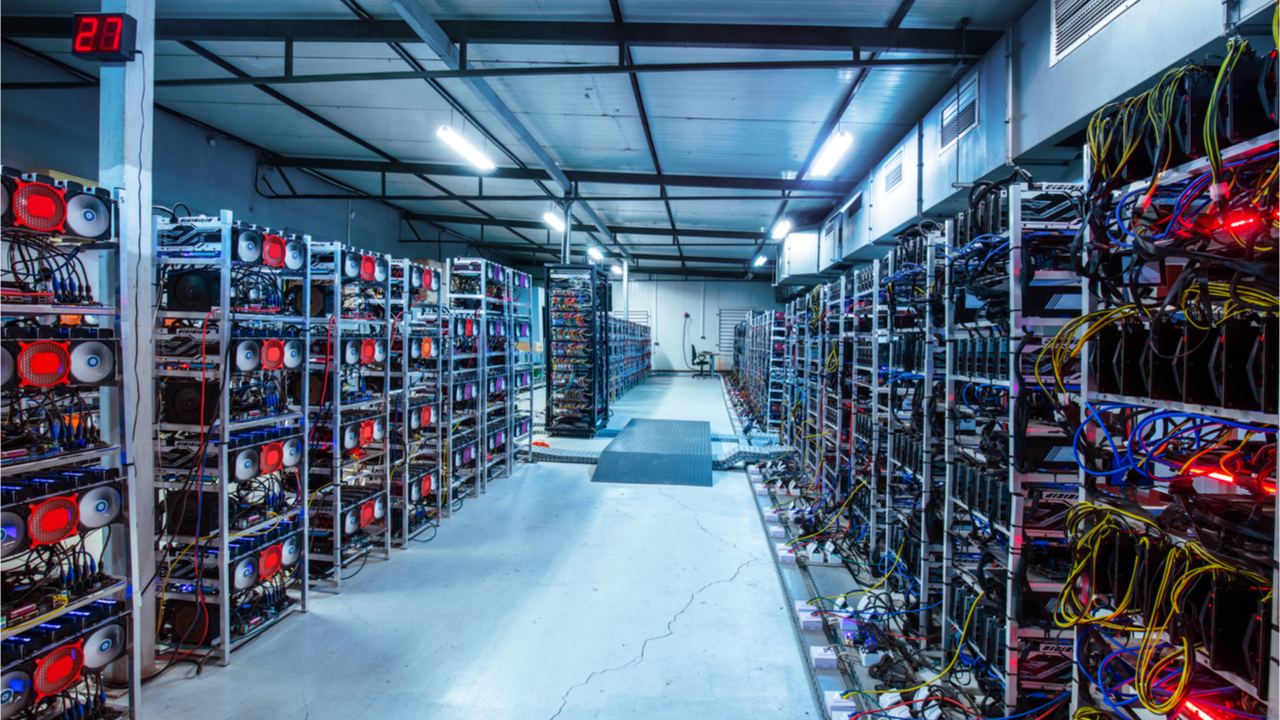
During the first month of 2022, both Bitcoin and Ethereum’s hashrates have climbed to all-time highs (ATHs). While Bitcoin’s hashpower surged to over 200 exahash per second (EH/s), Ethereum’s hashpower jumped to over 1 petahash per second (PH/s). A few mineable digital asset networks, however, saw their hashrates decline since their ATHs and the processing power behind these protocols hasn’t returned back to the highs captured long ago.
While Some Hashrates Skyrocket, Processing Power From Other Crypto Networks Remains Lackluster
At the time of writing, Bitcoin’s processing power is coasting along above the 200 exahash per second (EH/s) zone, after touching the ATH it captured on January 15. Six-month hashrate statistics indicate that on Sunday, January 16, 2022, BTC’s hashrate tapped a daily high of 216.50 EH/s.
The top three mining pools on Monday, January 17, include F2pool, Foundry USA, and Antpool, respectively. All three pools have more than 15% of the global hashrate or 29 EH/s of hashpower.
Six-month and all-time metrics also show that Monero’s network hashrate is coasting along at all-time high records as well, with about 3.49 gigahash per second (GH/s) at press time.
In close to four days’ time, Bitcoin’s network difficulty is expected to increase 6.24% which will bring the network difficulty to an all-time high. The estimated difficulty after the next epoch change will be around 25.89 trillion, according to data at the time of writing.
Ethereum’s network hashrate is also managing to hold the 1 PH/s range after first tapping this goal in December 2021. The top mining pool on the Ethereum network is ethermine.org with 295 terahash per second of hashrate, and the percentage of ETH hashrate on Nicehash is 3.66%.
While networks like Bitcoin, Ethereum, and Monero have seen all-time highs, networks like Litecoin have not seen new hashrate ATHs in recent times. LTC’s network hashrate on Sunday is 368.96 TH/s, but during the first week of July 2019, LTC’s hashrate tapped an ATH at 468.50 TH/s.
Today, Dash has a hashrate of around 5.24 PH/s, but in September 2020 it hit 7.14 PH/s. In total, that’s a 26.61% decrease in the network’s hashpower in 16 months.
The Ethereum Classic network has an overall hashrate of 20.37 TH/s on January 17, which is lower than the network’s ATH in June 2021 at over 23 TH/s.
What do you think about Bitcoin, Ethereum, and Monero’s recent hashrate highs? What do you think about the networks that have not returned to ATHs reached months ago? Let us know what you think about this subject in the comments section below.
Comments
Post a Comment