On February 9, the American professional baseball team based in Washington, D.C., the Washington Nationals, announced the team has partnered with Terra, the open-source blockchain platform and decentralized autonomous organization (DAO). The Washington Nationals detail that the team is a “leading innovator” and is “consistently introducing new technologies to enhance the fan experience.” Washington Nationals Ink Long-Term Deal With Terra Major League Baseball (MLB) team the Washington Nationals has partnered with the blockchain platform and DAO Terra, according to an announcement published by the team on Wednesday. The deal with Terra follows a slew of sports-related deals with crypto firms, but the MLB team will be the first to partner with an open-source blockchain project. In addition to the partnership, the algorithmic stablecoin UST that’s issued on the Terra blockchain will be “accepted as a payment method at Nationals Park as early as next season.” “The Nationals continue t...
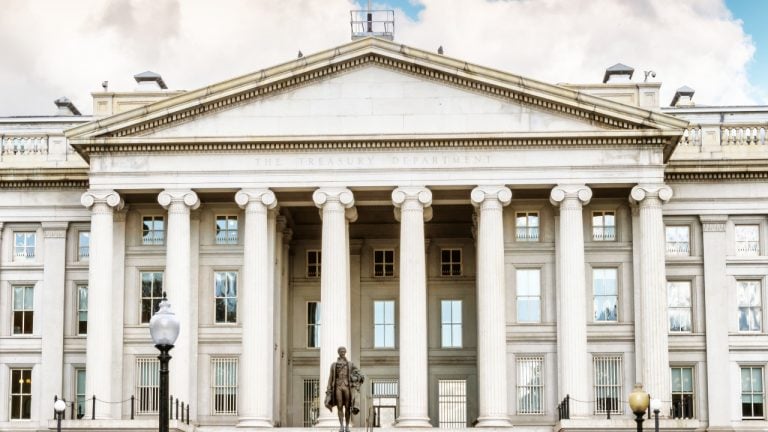
U.S. Senator Pat Toomey has urged Treasury Secretary Janet Yellen to “make significant revisions” to the proposed crypto regulation by the Financial Crimes Enforcement Network (FinCEN) and the planned adoption of the guidance issued by the Financial Action Task Force (FATF).
Senator Asks Janet Yellen to Revise Proposed US Crypto Regulation
U.S. Senator Pat Toomey wrote a letter to Treasury Secretary Janet Yellen Thursday regarding the U.S. approach to cryptocurrency regulation. “I write to raise concerns with two proposals involving the Department of the Treasury related to the regulation and oversight of cryptocurrencies,” he began.
The first concern relates to FinCEN’s proposed rule for cryptocurrency transactions and the second relates to the FATF guidance on cryptocurrencies and virtual asset service providers (VASPs). The senator described:
While I recognize that FinCEN and FATF’s proposals are seeking to address the misuse of cryptocurrencies for illicit activity, if adopted, they would have a detrimental impact on financial technology (fintech), the fundamental privacy of Americans, and efforts to combat illicit activity. I urge you to make significant revisions to them.
The senator spent the first part of his letter explaining that “Fostering financial innovation is important” for the U.S. He believes that “cryptocurrencies stand to dramatically improve consumers’ privacy, access to financial services, and power to make decisions for themselves.”
Toomey then asserted that FinCEN’s proposed crypto rule “will negatively impact” the U.S., citing two key reasons. Firstly, it would impose “onerous recordkeeping” and reporting requirements on crypto transactions “that extend beyond existing requirements for U.S. dollar transactions.” Secondly, he argued:
FinCEN’s proposed rule may also prove to be counterproductive in combating illicit activity … By limiting individual privacy and the ability to transact with financial institutions, the rule would likely push bad actors to utilize methods that do not interface with financial institutions.
“As a result, such cryptocurrency transactions would be less susceptible to appropriate government oversight and detection,” he continued.
The senator then pointed out that some reporting requirements for USD transactions have not been updated for more than 40 years. “Existing requirements on the U.S. dollar are no longer appropriately tailored to identify illicit activity,” he opined, urging Treasury Secretary Yellen to examine whether they are “appropriate for U.S. dollar transactions.” He emphasized that cryptocurrency “can be more easily traceable than transactions utilizing U.S. dollars” in some cases.
Turning attention to the FATF guidance, Senator Toomey asserted:
FATF’s guidance will drive cryptocurrency transactions away from financial institutions, undermining the ability of law enforcement and analytics firms to identify and track illicit activity. FATF should revise its guidance to focus on transactions and entities that warrant regulation.
Concluding his letter to Yellen, the senator said that the U.S. “should support, not inhibit, financial innovation,” adding: “I urge you to take a more thoughtful approach to identifying illicit activity so financial innovation can flourish and the privacy of Americans remains respected.”
Do you think Treasury Secretary Yellen will heed Senator Toomney’s advice? Let us know in the comments section below.
Comments
Post a Comment