On February 9, the American professional baseball team based in Washington, D.C., the Washington Nationals, announced the team has partnered with Terra, the open-source blockchain platform and decentralized autonomous organization (DAO). The Washington Nationals detail that the team is a “leading innovator” and is “consistently introducing new technologies to enhance the fan experience.” Washington Nationals Ink Long-Term Deal With Terra Major League Baseball (MLB) team the Washington Nationals has partnered with the blockchain platform and DAO Terra, according to an announcement published by the team on Wednesday. The deal with Terra follows a slew of sports-related deals with crypto firms, but the MLB team will be the first to partner with an open-source blockchain project. In addition to the partnership, the algorithmic stablecoin UST that’s issued on the Terra blockchain will be “accepted as a payment method at Nationals Park as early as next season.” “The Nationals continue t...
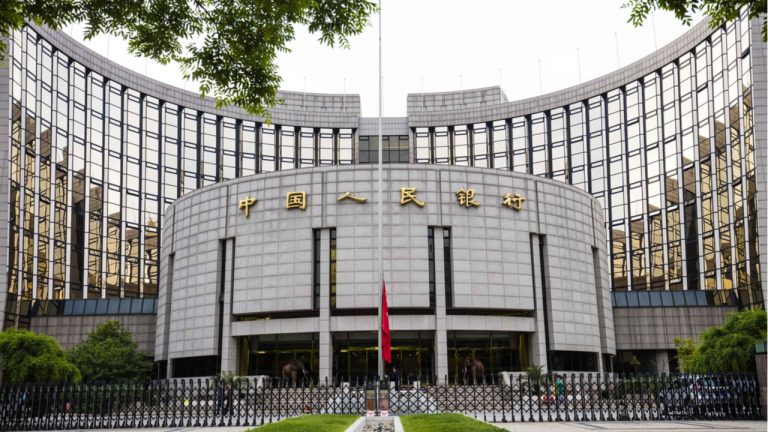
Privacy has been a discussion that has not gone unnoticed when it comes to the forthcoming launch of the digital yuan. The head of the People’s Bank of China-run Digital Currency Research Institute had firmly pointed out that anonymity cannot be guaranteed at all.
Feature Seeks to Avoid Tax Evasion and Finance Terrorism
During an interview with the Securities Times, Ma Changchun told the 2021 China Development Forum that a fully anonymous central bank digital currency (CBDC) is impossible.
The reason, said the official, is that the government needs to make it compliant with the anti-money laundering (AML), know-your-customer (KYC), and counter-terrorist financing (CTF) measures.
Per the official, such transactions should also be scrutinized to avoid tax evasion schemes through the upcoming Chinese CBDC, developed by the PBoC.
However, Ma clarified that there would be a “controllable anonymization” technology implemented in the digital yuan.
Although he didn’t explain in-depth the “controllable anonymization” concept, Ma pointed out that such anonymity is the one that it’s commonly used for privacy consumer protection purposes.
The Role of the Telecom Providers
Still, he explained how the digital yuan wallet could work out with KYC measures implemented:
The wallet with the weakest KYC strength is an anonymous wallet, which can be opened with only a mobile phone number. Of course, this type of wallet has the lowest balance and daily transaction limit, which can only meet the daily needs of small payments. If you want to make large payments, the wallet needs to be upgraded, and the wallet balance and payment limit will increase as the KYC intensity increases.
The head of the Digital Currency Research Institute also clarified which would be the role of the domestic telecommunication providers in the digital yuan’s development process:
Although the payment departments of telecom operators are also involved in the research and development of digital renminbi, according to the current national laws and regulations, telecom operators are not allowed to disclose mobile phone customer information to third parties such as the central bank. Of course, they are not allowed to provide it to the departments that operate digital renminbi. Therefore, wallets opened with mobile phone numbers are completely anonymous to the People’s Bank of China and various operating agencies.
What do you think about the “controllable anonymization” mentioned by the Chinese official? Let us know in the comments section below.
Comments
Post a Comment