On February 9, the American professional baseball team based in Washington, D.C., the Washington Nationals, announced the team has partnered with Terra, the open-source blockchain platform and decentralized autonomous organization (DAO). The Washington Nationals detail that the team is a “leading innovator” and is “consistently introducing new technologies to enhance the fan experience.” Washington Nationals Ink Long-Term Deal With Terra Major League Baseball (MLB) team the Washington Nationals has partnered with the blockchain platform and DAO Terra, according to an announcement published by the team on Wednesday. The deal with Terra follows a slew of sports-related deals with crypto firms, but the MLB team will be the first to partner with an open-source blockchain project. In addition to the partnership, the algorithmic stablecoin UST that’s issued on the Terra blockchain will be “accepted as a payment method at Nationals Park as early as next season.” “The Nationals continue t...
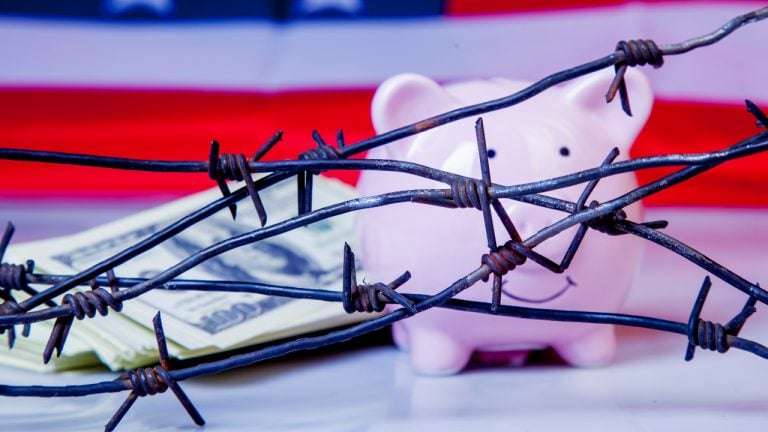
The U.S. Office of Foreign Assets Control has fined Bitgo for failing to prevent users in sanctioned countries from using its crypto wallet service. The agency says Bitgo processed 183 cryptocurrency transactions that were “apparent violations of multiple sanctions programs.”
US Treasury Alleges Bitgo Allows Users to Bypass Sanctions
The U.S. Department of the Treasury announced on Wednesday that the Office of Foreign Assets Control (OFAC) has entered into a $98,830 settlement with Bitgo “for 183 apparent violations of multiple sanctions programs.” Bitgo offers cryptocurrency wallet services. According to the announcement:
Bitgo failed to prevent persons apparently located in the Crimea region of Ukraine, Cuba, Iran, Sudan, and Syria from using its non-custodial secure digital wallet management service.
“Bitgo had reason to know that these users were located in sanctioned jurisdictions based on Internet Protocol (IP) address data associated with devices used to log in to the Bitgo platform,” the announcement describes.
Alleging that Bitgo’s “sanctions compliance procedures” were deficient, the OFAC claims that at the time of the transactions, “Bitgo failed to implement controls designed to prevent such users from accessing its services.” In addition, “OFAC determined that Bitgo did not voluntarily self-disclose the apparent violations and that the apparent violations constitute a non-egregious case.”
The 183 cryptocurrency transactions Bitgo processed totaled $9,127.79 and took place roughly between March 10, 2015, and Dec. 11, 2019.
“Individuals located in Crimea, Cuba, Iran, Sudan, and Syria signed up for ‘hot wallet’ accounts and accessed Bitgo’s online platform to conduct digital currency transactions,” the OFAC detailed. The agency further explained that Bitgo tracked the users’ IP addresses for security purposes but did not use the information for sanctions compliance purposes.
Bitgo implemented an OFAC sanctions compliance policy after learning about its apparent violations in early 2020. The company “represented that it has invested in significant remedial measures in response to the apparent violations.” They include hiring a chief compliance officer and implementing a new OFAC policy, which now applies to all of Bitgo’s services. The OFAC noted that now:
Bitgo screens all accounts, including ‘hot wallet’ accounts, against OFAC’s Specially Designated Nationals and Blocked Persons List, including blocked cryptocurrency wallet addresses identified by OFAC. Bitgo has also conducted a retroactive batch screen of all users.
What do you think about Bitgo violating the U.S. sanctions programs? Let us know in the comments section below.
The post US Government Fines Bitgo for Allowing Users to Bypass Sanctions With Cryptocurrency appeared first on Bitcoin News.
Comments
Post a Comment